Thank you! Your submission has been received!
Oops! Something went wrong while submitting the form. Please try again.

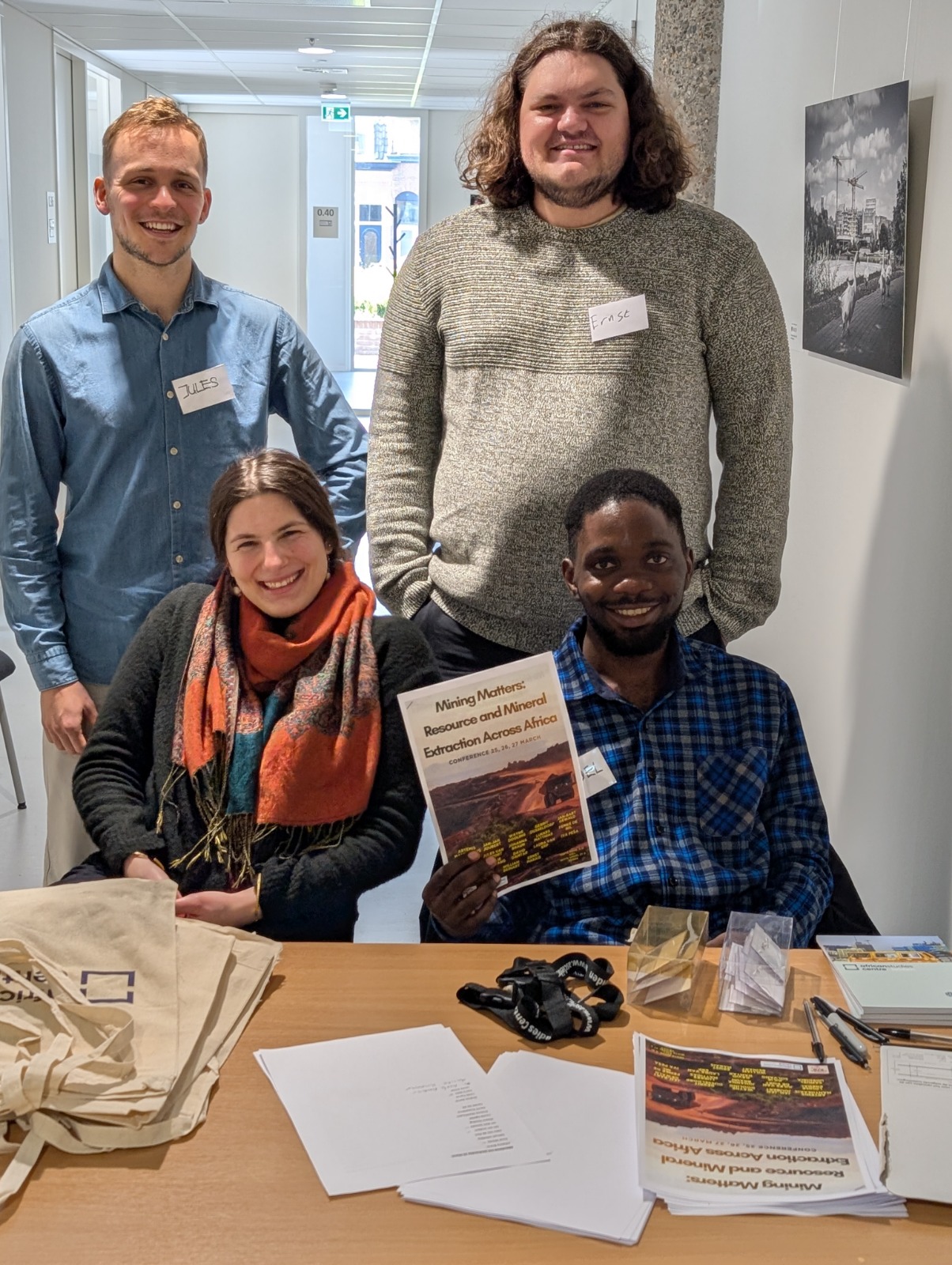
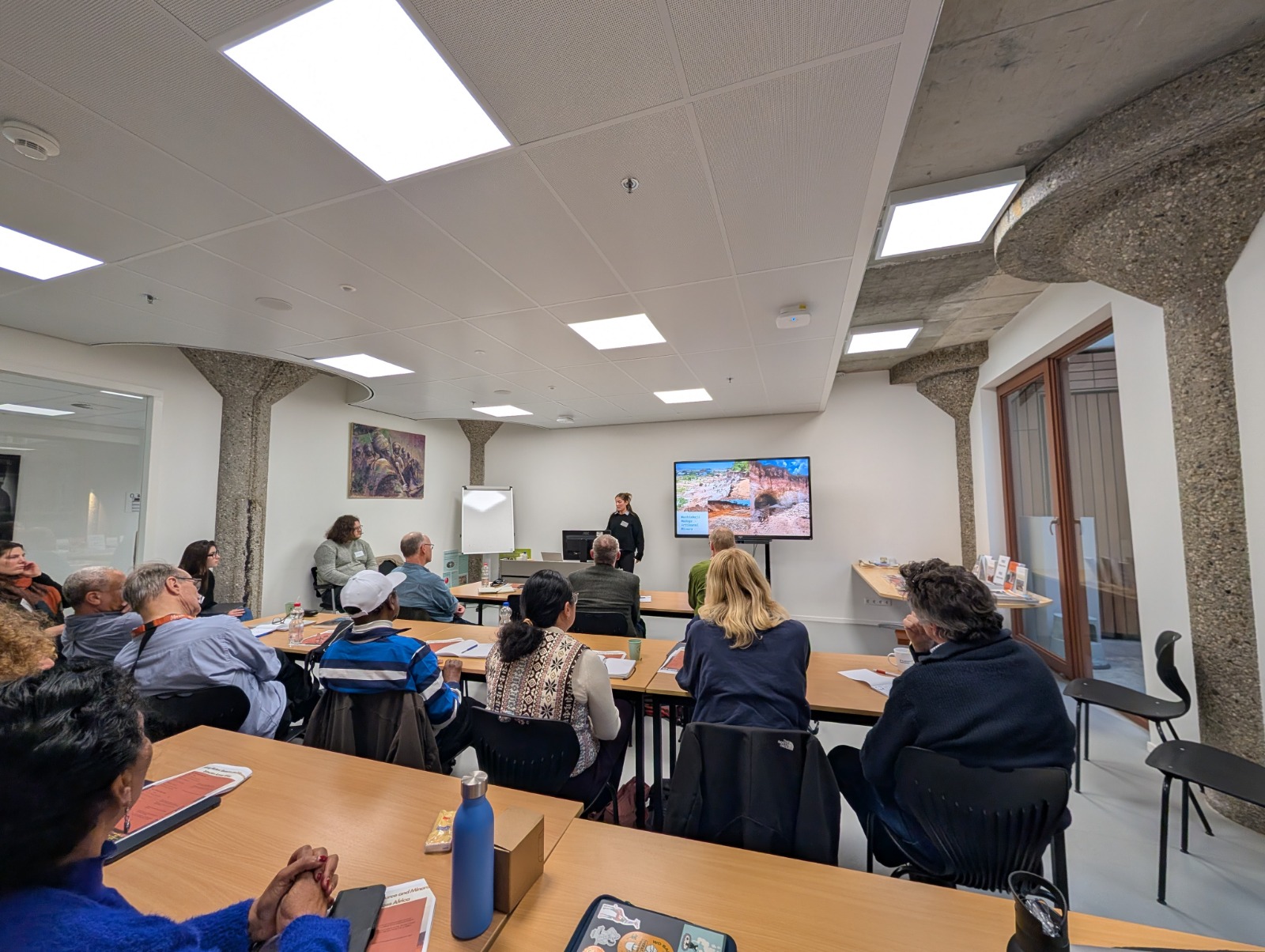
Organised by the final cohort of the Research Masters Programme African Studies under the supervision of Prof. Jan-Bart Gewald, the Mining Matters: Resource and Mineral Extraction Across Africa conference hosted last week by the ASCL, in partnership with the Boom2Dust project, was a huge success. Lasting three days from 25 to 27 March, the conference allowed seasoned scholars, professors and professionals as well as students and PhD candidates to come together and share their knowledge from their different disciplines and research projects concerning resource extraction in Africa.
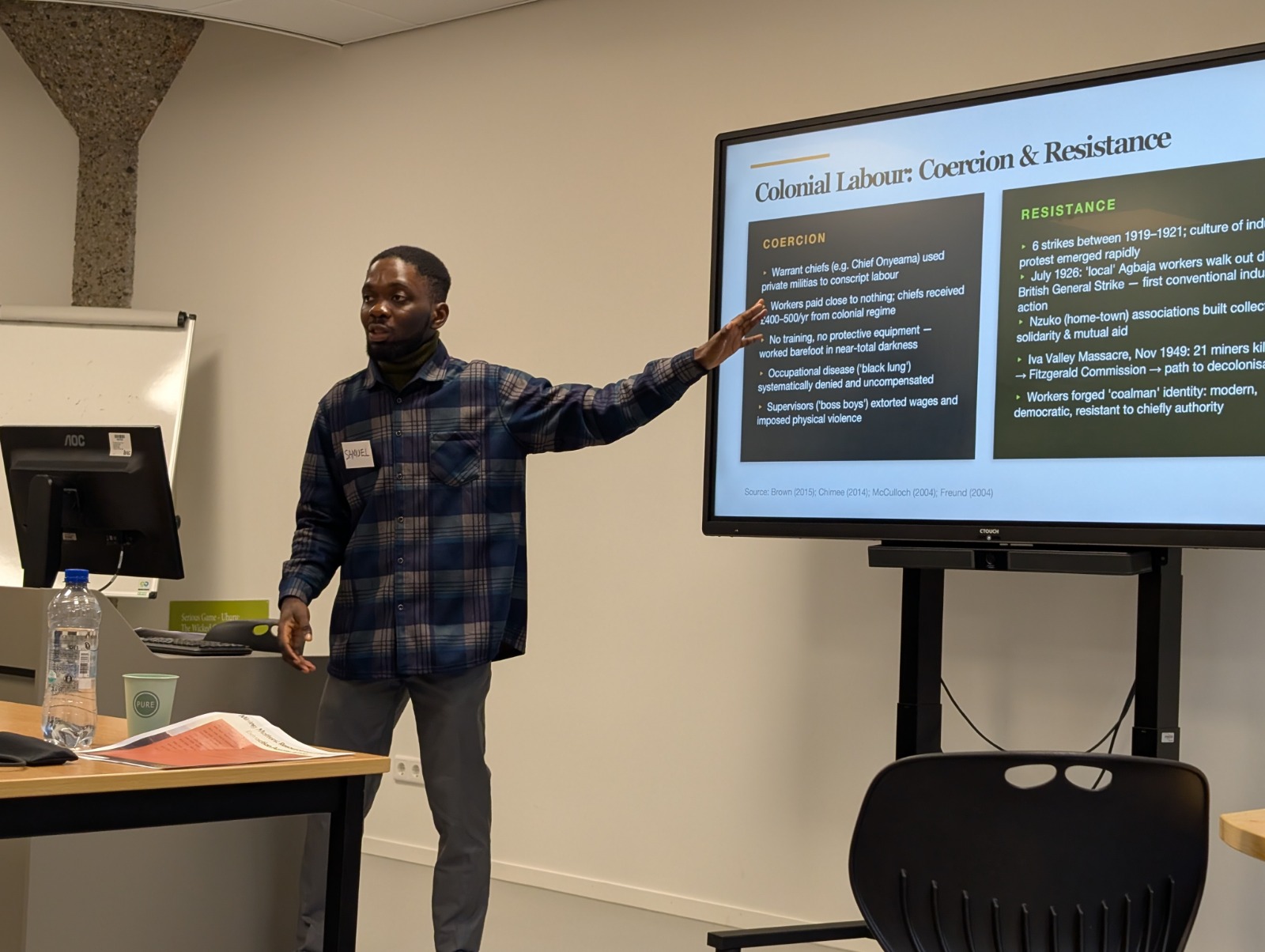
“The different disciplinary approaches brought by each speaker made it a true learning experience for everyone,” one attendee commented. Amongst the presenters there were historians, archaeologists, anthropologists and even a film maker. This meant that each person provided fresh perspectives to the conference, diversifying its content and creating a true place of learning for all the attendees. For example, renowned historian Prof. William Beinart joined the conference and spoke about the importance of agriculture to the former apartheid economy in South Africa, as opposed to diamond and gold mining. Archaeologist Dr. Gerrit Dusseldorp shared his work and studies on ancient, Pleistocene hunter-gatherer mining practices in Southern Africa. Laura Van Erp shared her film, an observational documentary, on contemporary sand mining in Sierra Leone. These are just some examples of additions that made the whole event so interesting, diverse and informative.
Like most other participants, I left the conference with more questions than answers, giving me the impression that the topics were rooted in contemporary and active research, fields and issues, showing the importance and pertinence of the works presented by everyone. Questions that linger in my head are How do we construct the differences between what we call artisanal and formal mining? Or Despite histories of oppression and coercion, why do mines then still often remain points of identity and nostalgia for former mining communities? Or How and why do mining activities become gendered activities and what effect does this have on the women involved?
The volume Gaping Holes: Towards Multispecies Histories and Ethnographies of Mining in Southern Africa (Brill; 2026), edited by Jan-Bart Gewald, Sabine Luning and Harry Wels was also launched at the conference; an innovative volume expanding the ways we look at the histories of mining in Southern Africa and bringing new perspectives and histories to the table.